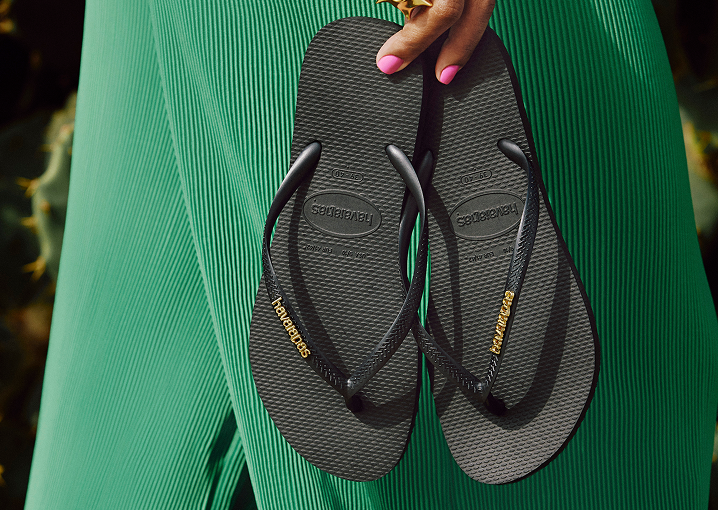
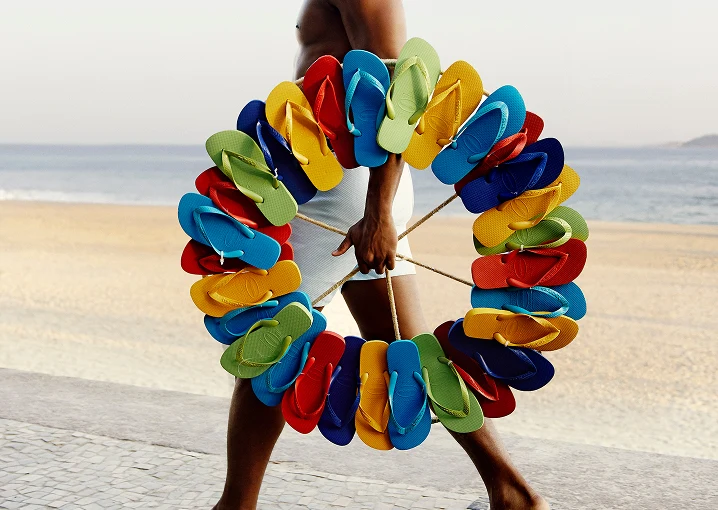
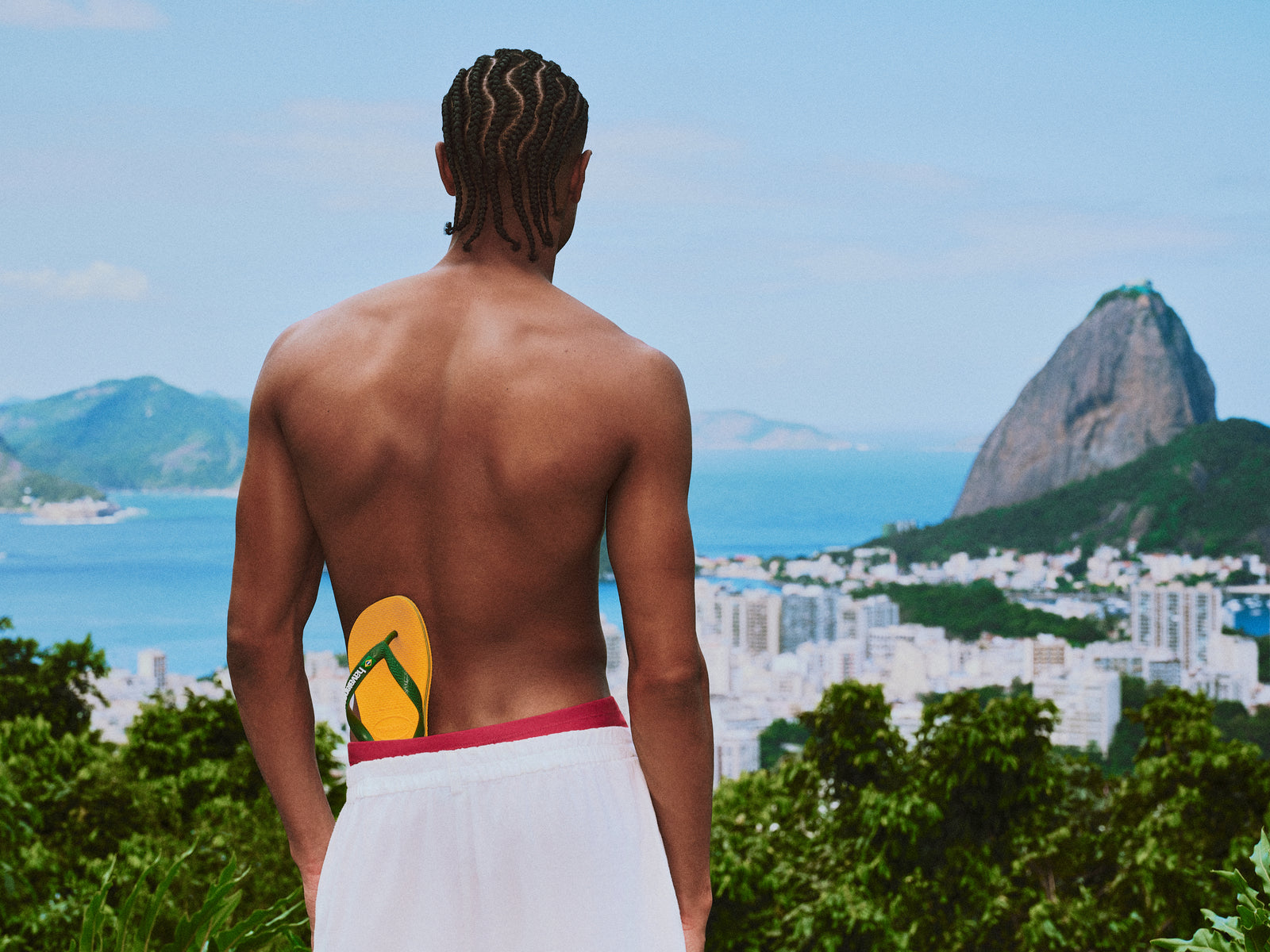
Havaianas were born in Brazil in 1962, inspired by Japanese zori sandals — but built entirely in rubber, with a distinctive rice-grain textured sole that's still the brand's signature today. They caught on fast: by the 1980s Brazil's own government had declared flip-flops a household necessity. A 1990s surf trend, flipping the classic white sole inside out for a single-colour look, turned a working-class staple into a design object, and Havaianas has been selling well over 250 million pairs a year in more than 100 countries ever since — Brazilian spirit, worn on every continent.
Made of Brazil
Sixty summers of the original rubber flip flop.
- 1962
- Born on the Brazilian coast
- 1966
- Rubber flip flop patented
- 100+
- Countries on sale today
- 250M+
- Pairs sold every year
The story so far
From a Brazilian beach to every coast in the world.
1962
A star is born
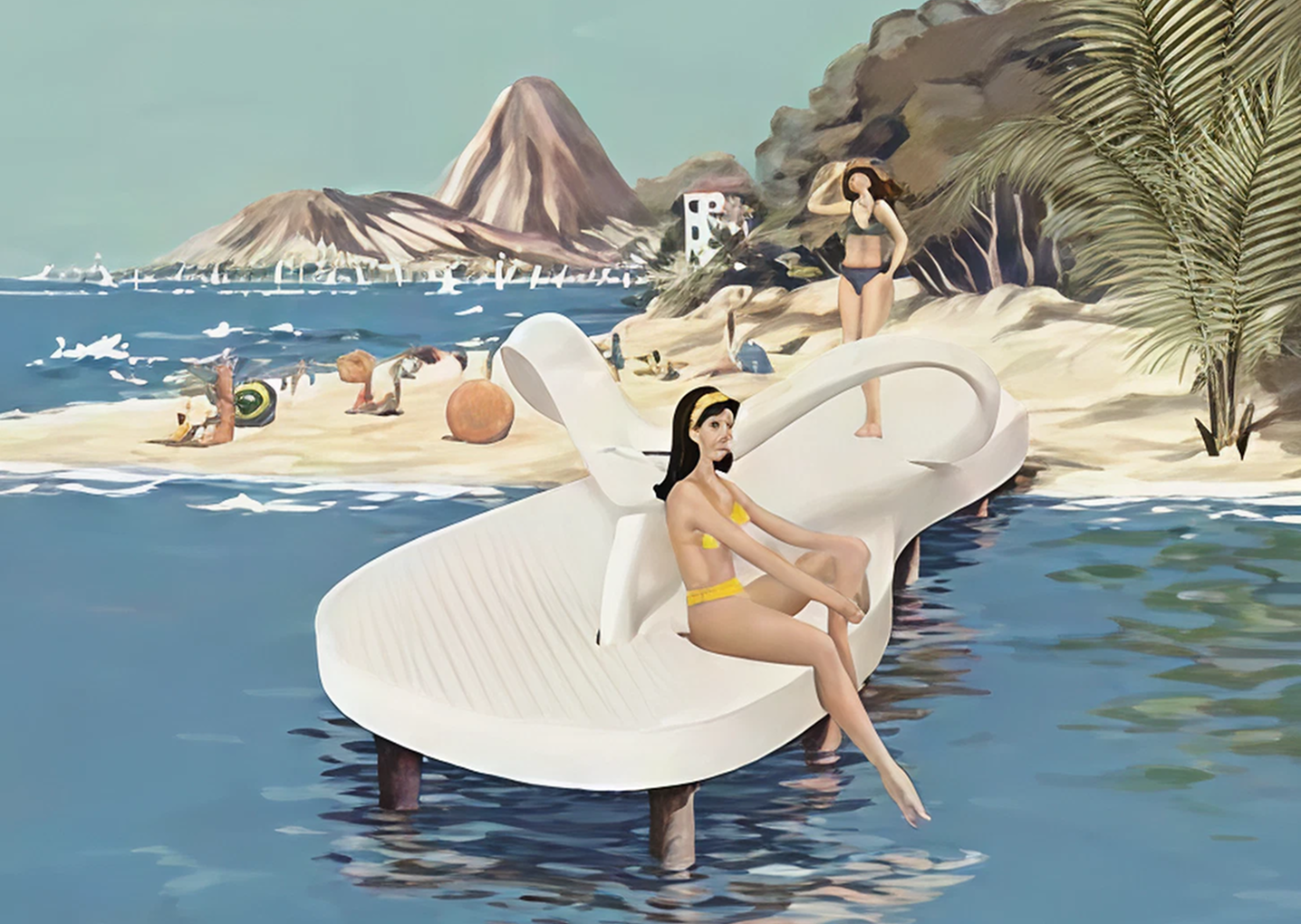
Created in Brazil, inspired by traditional Japanese Zori sandals — woven straw swapped for rubber, and the look modernised, which is where the signature rice-grain sole pattern comes from. The name, Portuguese for “Hawaiians”, was chosen for its tropical, endless-summer feel.
1964
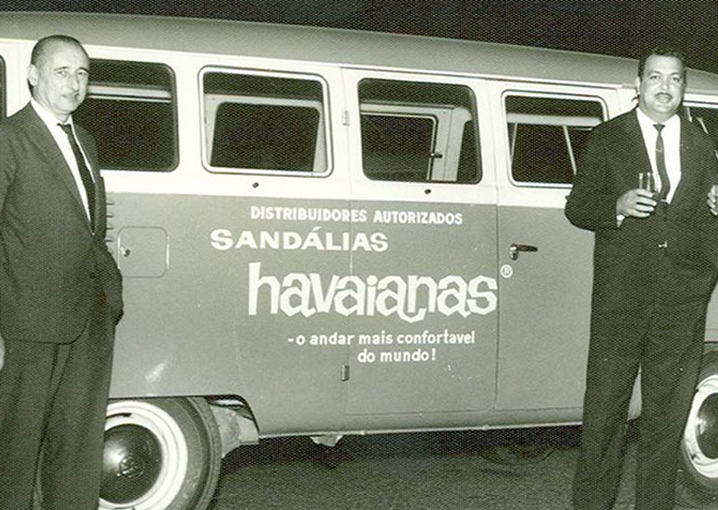
The Kombi
Practically everyone in Brazil was wearing a pair, and travelling salesmen sold Havaianas straight from their vintage Volkswagen Kombi vans, right across the country.
1966
The original rubber flip flop
Proof that Havaianas invented the original rubber flip flop: parent company Alpargatas registered the patent for the now world-famous rubber thong.
1969
More colours
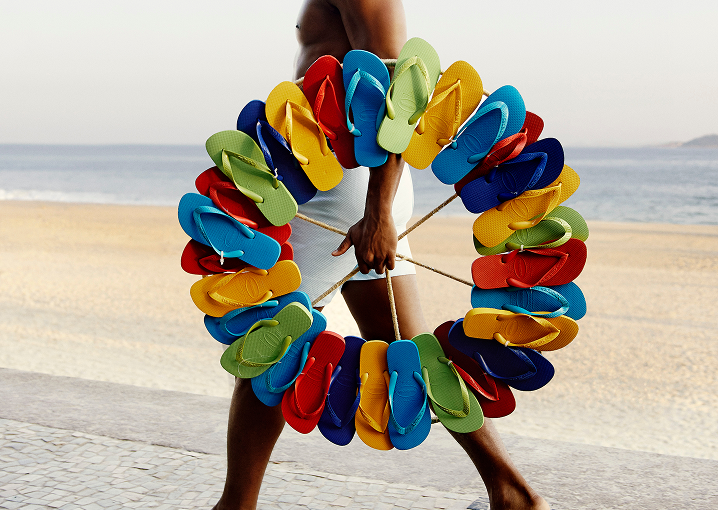
At first there was only blue and white. Then a production error produced a batch of green pairs that reached the market — the reaction was so good that the Top line launched in green, brown, yellow and black.
1980
A national essential
The Brazilian government listed Havaianas among the country's everyday fundamental products — alongside rice and beans — to control inflation. Millions of pairs were already selling in Brazil each year.
1990s
Patterns that pop
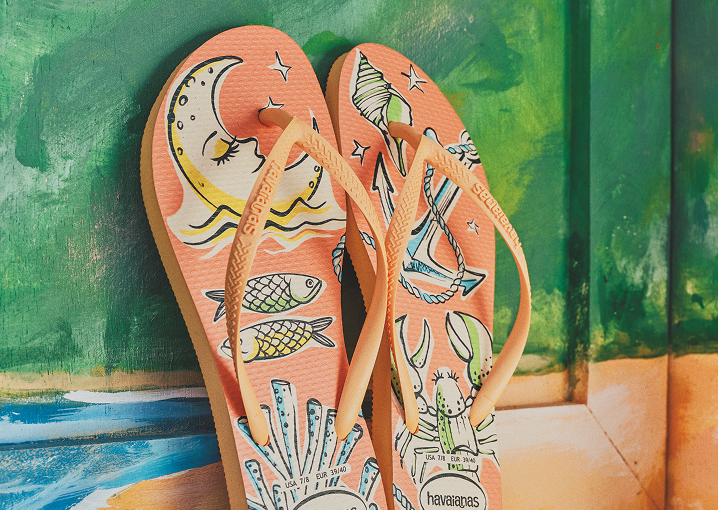
Surfers started flipping the white soles upside down for a single solid colour. Single-colour styles followed, then the first printed pair with a hibiscus flower. Patterns have been a staple of the brand ever since.
1998
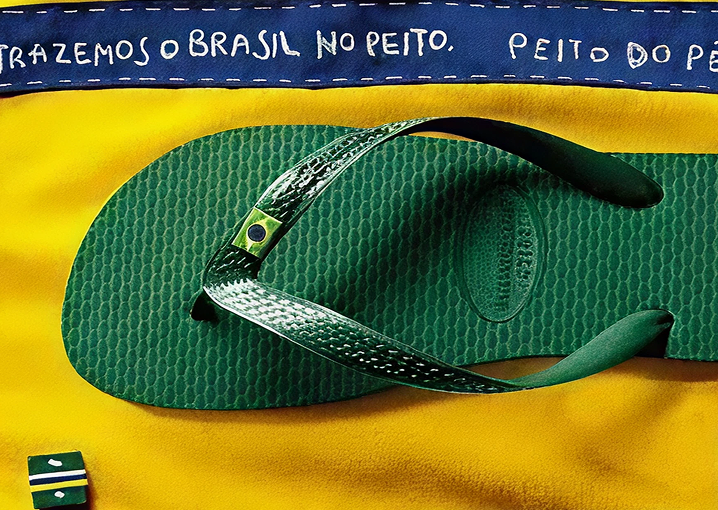
Brazilian passion
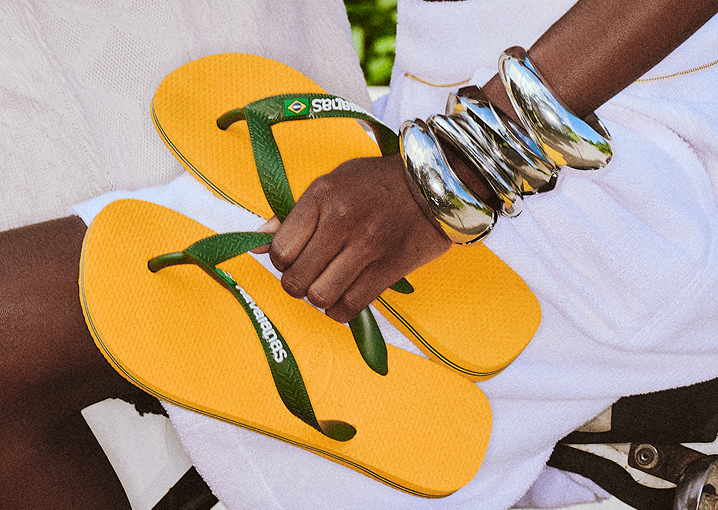
For the '98 World Cup came Havaianas Brasil — a small Brazilian flag on the strap. It remains one of the best-selling flip flops in the world.
1999
A runway phenomenon
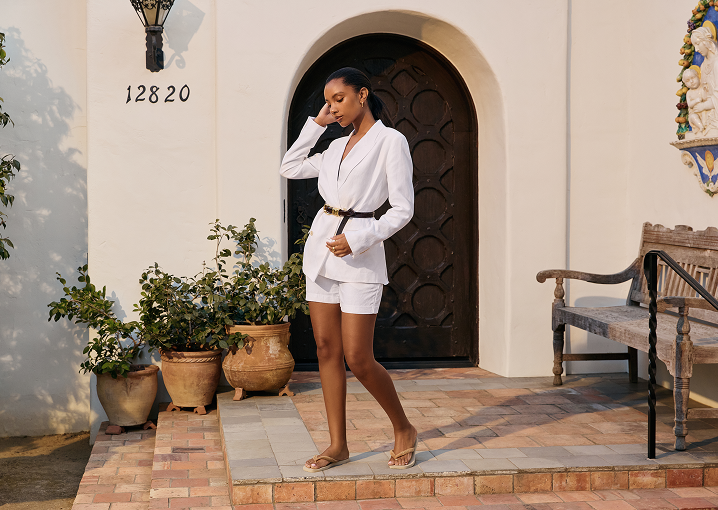
Havaianas crossed into fashion with a runway debut at Jean Paul Gaultier's show in Paris, opening the door to collaborations with some of the biggest designers and brands in the world.
2000s
Re-inventing the classics
New styles keep arriving year after year — Slim for women, sandals, square-toe shapes — alongside special collections with crystals, embroidery and handcrafted detailing.