
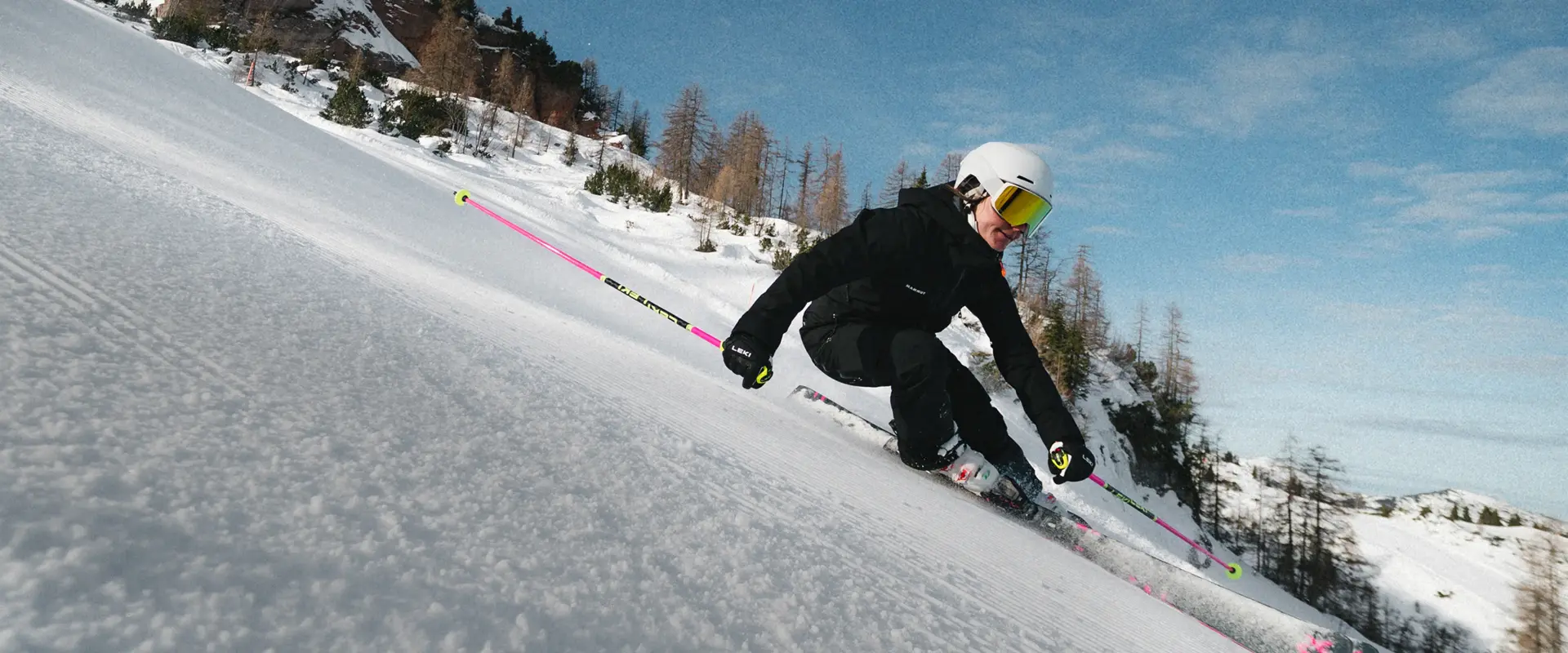
Karl Lenhart was a skier who couldn't find a pole he liked, so in 1970 he built his own — putting his aircraft-industry knowledge of aluminium to work at his small wood-turning workshop in Kirchheim unter Teck. Four years later he went further still, inventing the world's first adjustable trekking pole, the Makalu, which Reinhold Messner carried to the summit of Everest.
Still family-owned into its third generation, Leki has spent more than 75 years turning a skier's frustration into the standard every serious pole is measured against. With over 250 patents to its name, Leki remains the pole professional ski and trekking guides reach for first.
Kirchheim unter Teck
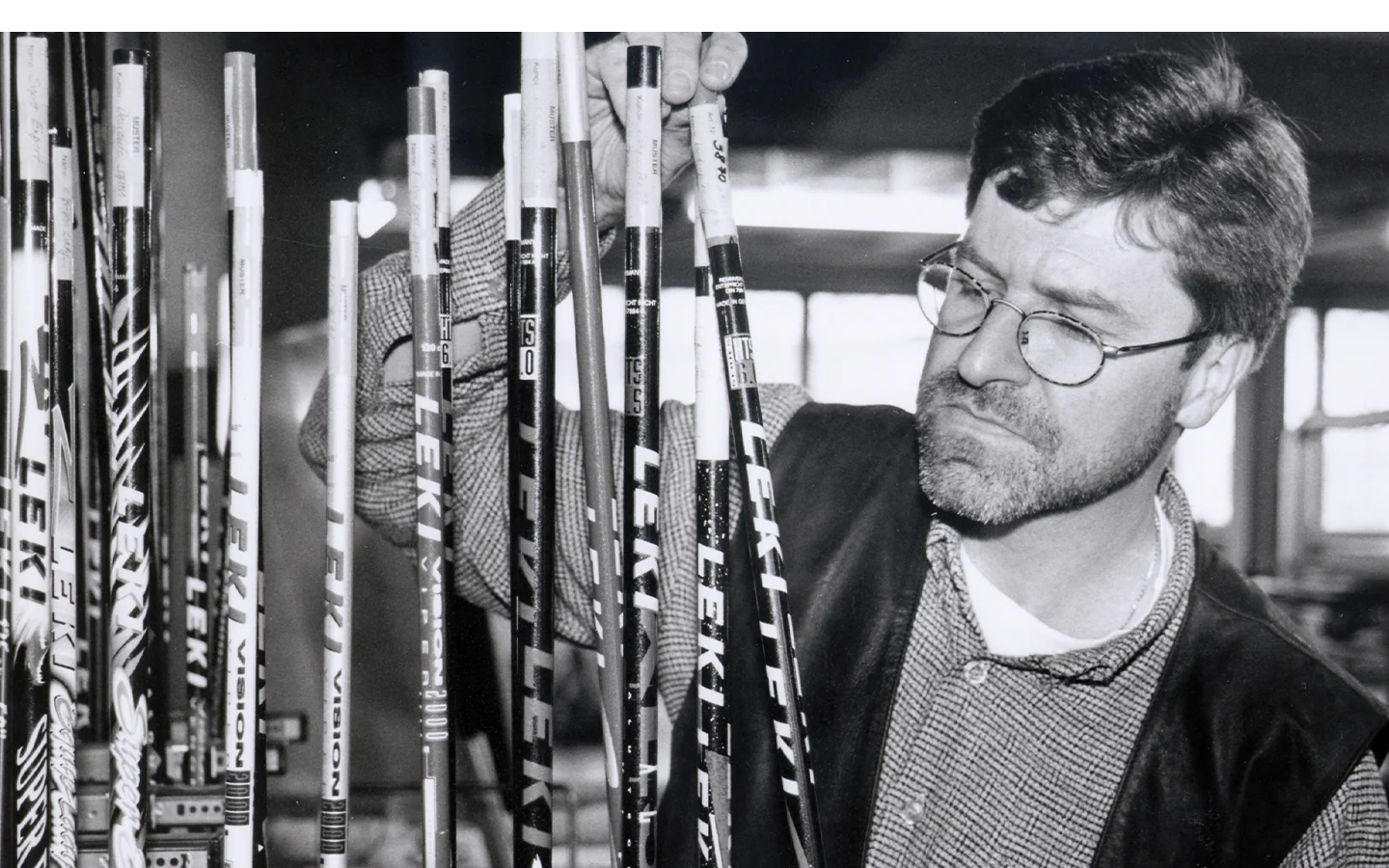
Every pole, measured by hand first.
What began as a skier building a better pole for himself became a workshop where every shaft was weighed, flexed and checked before it earned the name on the side.
Three generations on, the family still runs the company from the same Swabian town — and the same habit of questioning each detail has produced more than 250 patents.
What Leki stands on
Six things every pole has to earn.
Passion
Everything here is done with conviction and a genuine love of sport outdoors. Nothing leaves the building until the team has tested it themselves and is completely convinced.
Innovation
Leki never rests on what it has already achieved. The adjustable pole, the Trigger release system, over 250 patents — today's challenges become tomorrow's solutions.
Quality
Design and manufacture aim at the highest standard, because reliable, long-lasting products are what keep an athlete safe on the mountain year after year.
Partnership
Promises are kept. More than 1,000 athletes across skiing, trail running and mountaineering rely on Leki, and many of those relationships have lasted decades.
Peak performance
Leki exists to help people perform at their best — from Mikaela Shiffrin and Johannes Klæbo on the World Cup circuit to a first long day on the trail.
Responsibility
The mountains are where this brand lives, so protecting them is not optional. Responsibility runs through the products, the factories and the partnerships alike.
Where the poles go
Six sports, one obsession.
Alpine skiing
Race, piste and freeride poles, with the Trigger S system linking glove and grip for a secure hold and instant release.
Ski touring
Light, adjustable and foldable poles with long grips for steep skinning, built for long ascents and fast descents.
Cross-country skiing
High-modulus carbon shafts and race straps engineered for direct power transfer on every push.
Trail running
Ultralight folding poles that pack away in seconds and give back propulsion on every climb.
Hiking & trekking
The category Leki invented in 1974 — adjustable poles that take the load off knees on long descents.
Nordic walking
Ergonomic grips and shock-absorbing tips designed for the technique, not adapted from something else.
Responsibility
Made close to home, built to be repaired.
Leki designs and manufactures in Kirchheim unter Teck in Germany and Tachov in the Czech Republic — short supply lines, full control of every production stage, and products meant to last long enough to be worth fixing.
- 250+
- Patents
- 1970
- First Leki pole
- 1,000+
- Athletes supported
- 3rd
- Family generation
- 01
Made in Europe
Development and production stay between Swabia and the Czech Republic, which keeps transport short and every manufacturing step under Leki's own supervision.
- 02
Energy from the roof
The first photovoltaic array went up at Kirchheim in 2005. Process heat from production is reused to warm the plant, and in 2019 Leki became the first company in its district to receive the KEFF energy-efficiency award.
- 03
Repair, don't replace
A worldwide network of specialised service centres repairs poles and gloves after years of hard use, with spare parts available for a large part of the range.
- 04
Protecting winter
Leki supports Protect Our Winters and the High Five Foundation, alongside long-running backing for regional clubs and international projects.