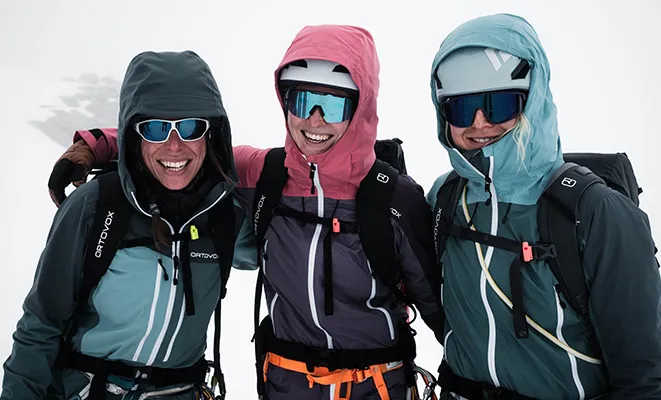
In 1980, ski tourer Gerald Kampel and Jürgen Wegner built the F2 in the mountains south of Munich — the world's first double-frequency avalanche transceiver, and the invention that gave Ortovox its name and its purpose. Everything since has followed that same founding instinct: protect people in the mountains, first and best. Ortovox added merino wool mountain apparel to the range in 1988 and now runs its own Safety Academy, training thousands of skiers and guides each year in the avalanche skills its products are built to support.
Our values
Protection is the compass. Everything else follows it.
Protection
The inner compass. Protecting the people who move through the mountains — and the sheep, the pastures and the alpine terrain they move through.
Safety pioneers
Alpine safety has been the job since the first double-frequency transceiver. Search technology, airbags and rescue knowledge are still developed in-house.
Function first
Gear is judged by the one second that decides an outcome. No styling that costs performance, no feature that has not earned its place.
Alpine origin
Designed south of Munich, tested on the doorstep in the Bavarian and Austrian Alps, and trusted on the highest mountains in the world.
Wool expertise
A technical natural fibre pioneer since 1988, with sourcing tied to strict animal-welfare rules under the Ortovox Wool Promise.
Partnership
Mountain guides, alpinists, wool growers and dealers are treated as long-term partners — the mountains reward people who look after each other.
The wool
A high-tech fibre that grows on a mountain sheep.
1988
Wool meets the mountains
Ortovox puts merino wool into mountain apparel at a time when synthetics were the obvious answer — a fibre that insulates when damp, resists odour and regulates itself.
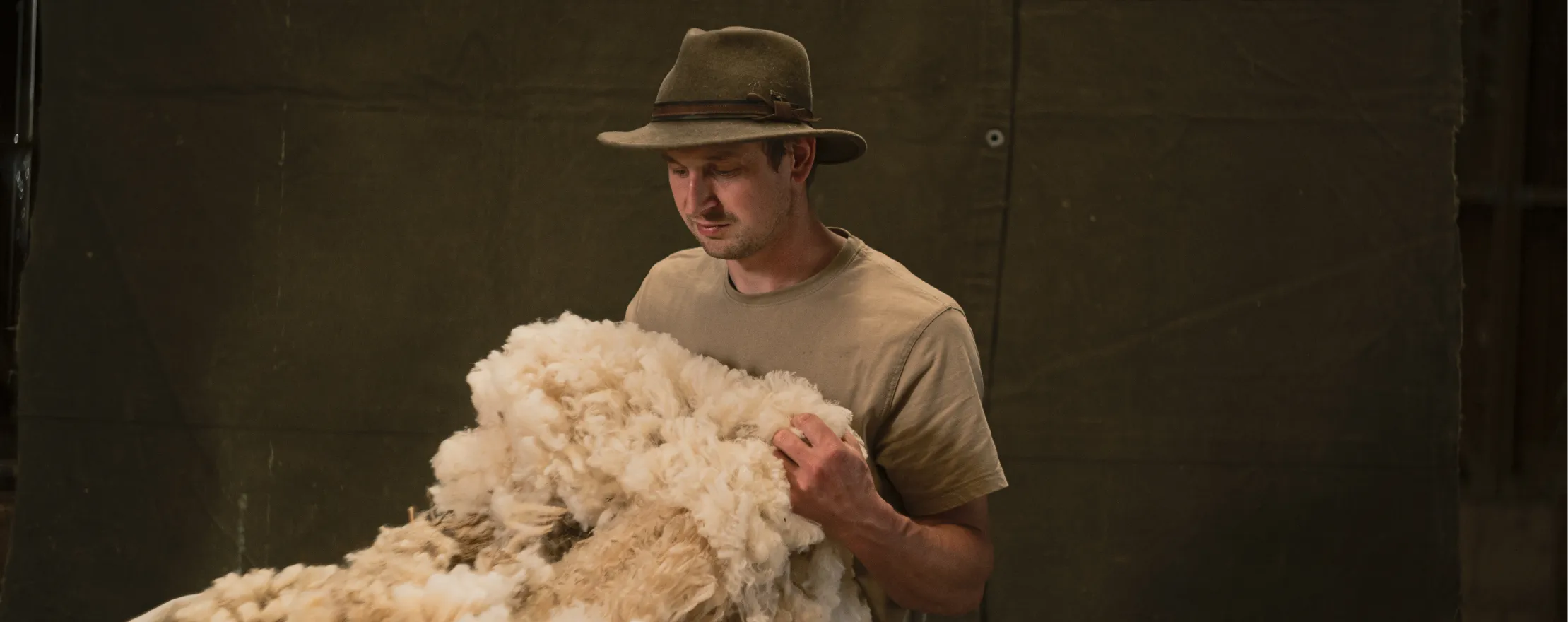
Raw fleece, sorted by hand before it ever becomes a garment 1995
Merino next to the skin
The first pure merino baselayers turn wool into a complete layering system, from skin to shell, rather than a single warm piece.
2011
Swisswool
Insulation made from the wool of Swiss mountain sheep — a regional raw material that was previously discarded, washed and processed in Europe.
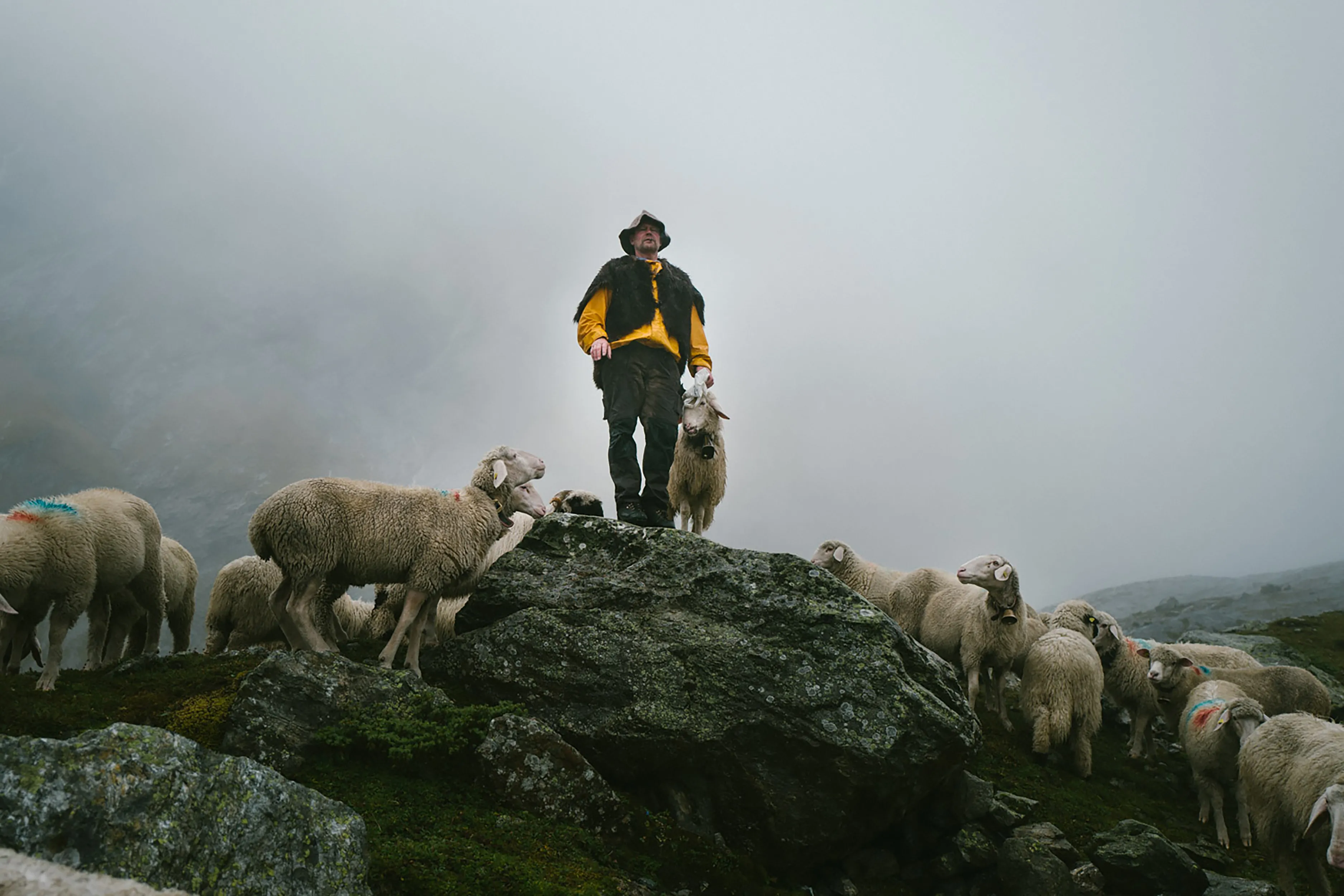
Swisswool — fleece from sheep that graze the high Alps Today
Wool, engineered further
Merino is combined with other fibres where it makes a garment better — wool-blended insulation and next-generation knits that keep the natural fibre doing the work.
ProtACT
Slower. Longer. Circular.
ProtACT is how protection is applied to everything beyond the product: the animals the wool comes from, the people who sew the garments, and the mountains that give the brand its reason to exist.
- 01
Animals
The Ortovox Wool Promise.
- No mulesing, on every farm in the supply chain
- Grazing, husbandry and transport rules audited by independent inspectors
- Wool traced back to named growers rather than an anonymous market
- 02
People
Fair Wear Foundation Leader status.
- Working conditions independently assessed in the production countries
- Long-term factory partnerships instead of shifting orders on price
- Wages, hours and safety reviewed and published each year
- 03
Planet
Fewer emissions, longer product lives.
- Carbon footprint measured and reduced with ClimatePartner
- Repair service and spare parts so a garment stays in use
- Design for durability first — the greenest jacket is the one you keep
Safety Academy
More than a thousand courses a year — avalanche awareness, emergency response and freeride decision-making — led by state-certified mountain guides. Knowledge is treated as a piece of safety equipment.
Textile-to-textile recycling
Worn-out garments are recycled back into new fabric instead of the usual detour through PET bottles, closing the loop on the material Ortovox already has.